On Jan. 23, 2015, I became the first kid on my block to get an Amazon Echo, welcome the kinda-smart speaker into a very skeptical family. Amazon announced its “crazy speaker that talks to you” in late 2014, offering it for $99 to Prime members who moved fast to get on the waitlist. It offered so many buzzwords — beam-forming microphones, 360-degree audio, and of course, a voice-enabled personal assistant. I couldn’t say no.
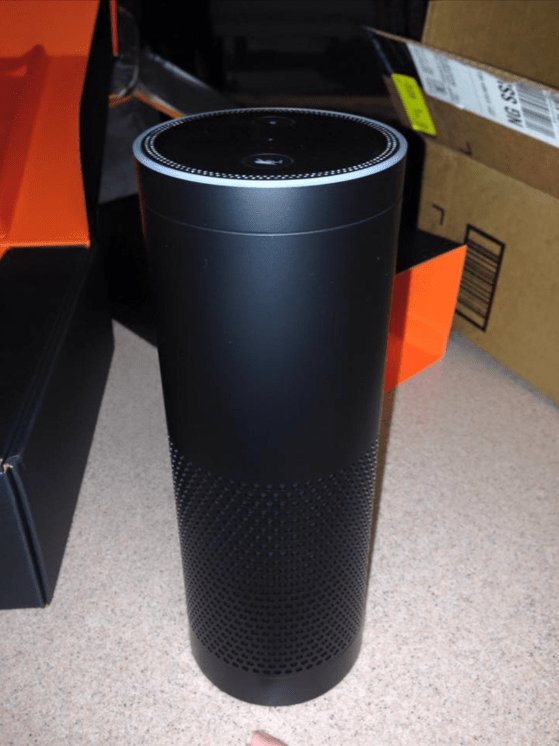
The original Echo was a matte black cylinder of smooth plastic with some speaker grills on its bottom half, looking more like a black Stanley Quencher than a speaker. It had a 2001 monolith quality with no loud branding, just a blue ring on the top surface that, when awakened with its given name “Alexa,” would light toward you like a Cylon eye.
In terms of what it could actually do, the list was surprisingly short: it could answer basic questions, usually with data from Wikipedia or a straightforward web search. It could tell you the weather, sports scores, and, generally speaking, facts from the first paragraph or two from a Wikipedia article. It doesn’t seem like much in 2024, with generative AI able to spit back (and hallucinate) almost anything imaginable, but back in 2015 it was pretty magical.
I’ve had a few other Echo devices over the years, including a couple of Echo Shows, a Dot and one of the newer spheroid Echos. I have an Echo Auto which is a pretty half-baked little device but it connects my phone into the aux jack of my older car without a lot of headache.
Generally speaking, the sound quality on Echo devices has gotten significantly better while the pace of innovation with Alexa herself has become noticeably worse. For a few years, Amazon was pushing the Alexa platform as an application development framework with some pretty innovative ideas. I built a marathon pace calculator called Pace Maker, and it taught me a lot about using Amazon’s serverless function technology. But, as Amazon has struggled to turn Alexa into a profit driver — they tend to sell the speaker devices at a very low cost, presumably to gain market share — they’ve let the platform wither somewhat.

These days, the voice assistant is often pushy with annoying follow-up questions and requests, offering support that no one asked for and often not giving you what you ask for. The screen-enabled devices are always pushing reorders of Amazon products and rarely has useful news or relevant content. Even the parts of Alexa that are still useful, like shopping lists and turning on lights, are hindered by a mobile app experience that feels janky.
Panos Panay left Microsoft’s Surface group last year to head up Amazon’s hardware division, and I hope that he turns the Echo line around. It’s a product I’ve used literally every day of the past nine years, and I’ve generally enjoyed my time with the devices a great deal. I’ve never regretted any of the units I’ve purchased, and, purely as speakers, they do a fine job for the price (though they’re far from audiophile-quality). At almost ten years old, though, the Alexa experience just feels like it should be a lot better than it is.





 clontzville.com
Leave a comment