My younger kiddo is reading “Madame Bovary” for high school lit, so we decided to watch the movie last night. Turns out that’s a tougher decision to make than you might think, as it’s been adapted lots of times, a 2015 version, a 1991 version, a TV version in the mid-70s and an old-Hollywood version in 1949. We opted for the 1949 version on the premise that it probably took the fewest liberties trying to modernize the text.
Turns out that it’s great! Fun lead performance by Jennifer Jones and a young Louis Jourdan as one of her paramours. Aside from a weird framing mechanism that starts and ends the movie where Flaubert is on trial for the eponymous novel, it’s a really modern-feeling, well-paced movie. I think the historic trial scene really exists to make “Flaubert’s” voice-over seem grounded, or maybe to inoculate the movie against a postwar Boomer moral reaction against the title character’s lusty derangement.
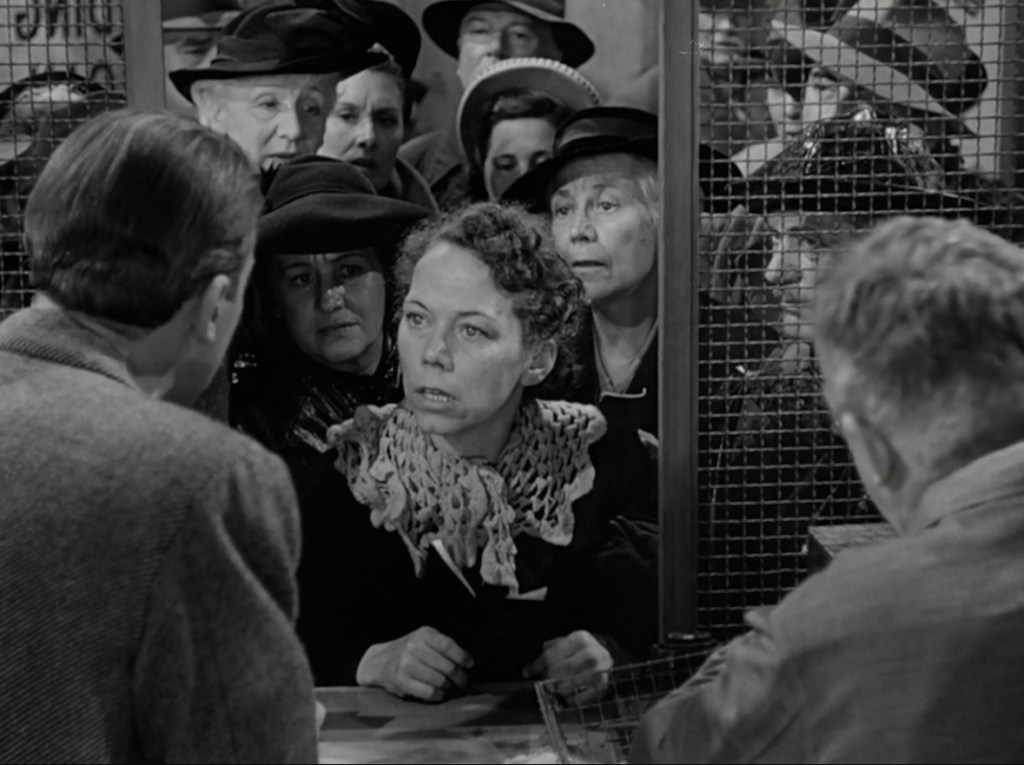
One fun spot was actress Ellen Corby’s small appearance as Bovary’s servant. I was pretty sure I recognized her as one of George Bailey’s poor townsfolk in “It’s a Wonderful Life,” and a little IMDB digging found that to be the case. She had a huge list of film and TV appearances in her long life, most notably winning Emmys as Grandma Walton in the 70s.
Not sure why she always stuck out in a very short scene in “It’s a Wonderful Life,” but she just had a face that left an impression on me. Probably because during the pivotal bank run scene, she shows George grace in only asking for what she absolutely needs. Or maybe it’s the way she’s framed in the scene, where your eye is drawn to her.
One really surreal part of the movie sticks out: Emma Bovary is at a ball where she spends the evening dancing with admiring suitors as her estranged husband gets drunk. She is drunk with the admiration of the men in the room and gets lightheaded, prompting the host of the party to smash out the windows of the ballroom to give her some air. It’s one small moment of heightened reality in an otherwise grounded narrative, but it’s kind of a cool moment because it’s the scene where she begins to lose her grip on reality. Not sure if it’s meaningful otherwise, but it sticks out.
Anyway, check out “Madame Bovary” if you’re inclined. It’s great.





 clontzville.com
Leave a comment